


Need Real Answers for your Specific Use Case? Talk to our Engineers
IEPE accelerometer, orientable, ceramic shear, 50 g / 8775A
Kistler Aero/Defense (T&M)
Select a Model:
description :
IEPE accelerometer, orientable, ceramic shear, 50 g, 10-32 coaxial connector
Choose Quantity:
1
The W5 Engineering Advantage

20+ Years in Testing

All Across North America

Trusted by Industry Leaders

24-Hour Engineering Replies

Secure Order Processing

ISO-Level Quality Assurance
8775A
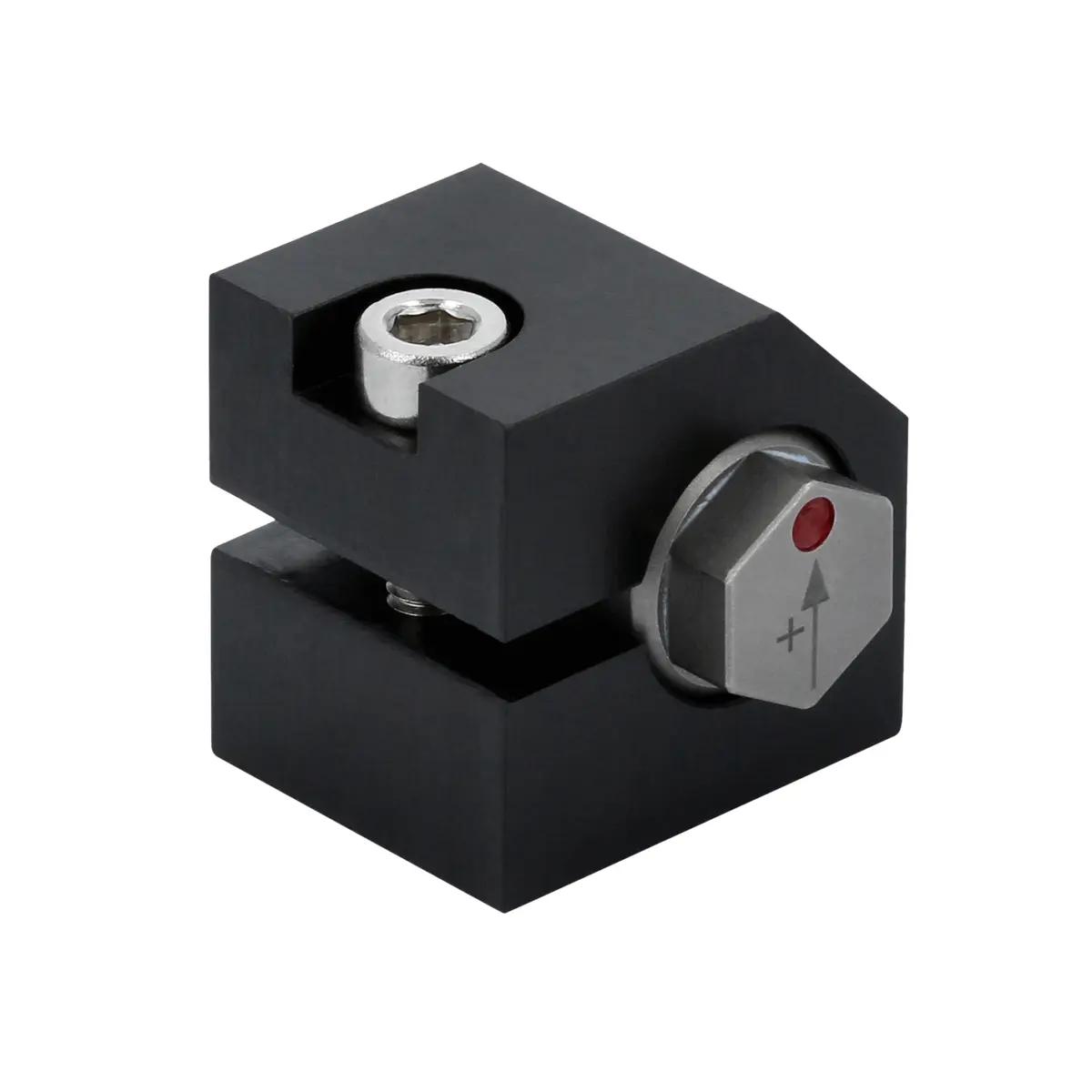
The Type 8775A is an orientable single axis accelerometer that can measure acceleration in the direction shown by the markings shown on the head of the sensor. This accelerometer has a ±50 g measuring range.
Type 8775A is an IEPE (Integrated Electronics Piezo-Electric), lightweight single axis accelerometer which allows for vibration measurements in one axis. The lightweight design of the 8775A reduces the effect of mass loading on test structures. Type 8775A uses Kistler shear element technology, assuring a high immunity to base strain. The welded titanium construction provides a lightweight hermetic housing. An integral silicone cable option is available for waterproof vibration testing up to 16 bars. Type 8775A can be mounted adhesively or fastened into the Delrin mounting block 8475K01. Use of the Delrin mounting block to mount the Type 8775A will reduce the upper frequency response of the sensor. Unique to the Type 8775A accelerometer is the sensor’s capability to be oriented in any direction. When used in combination with the 8745K01 mounting block, the Type 8775A can be freely oriented in any direction perpendicular to the 10-32 coaxial connector, with vibration measured in the direction of the arrow etched onto the surface of the sensor.
What is the maximal cable length of IEPE sensors?
Be aware that ground isolated and differential sensors are preferable for long cable length applications.
The maximum cable length can be calculated as follows: I = 2 * π * f * C * E (I = Current in Amperes, f = Frequency in Hz, C = Capacitance in Farads (typically 98 pF/m), E = Output in Volts, Peak)
Main features / advantages
IEPE, ±50 g range
Can be oriented in any direction
Hermetic, titanium construction
Ceramic shear sensing element
TEDS option
Waterproof IP68 integral cable option (up to 16 bar)
Conforming to CE
IEPE accelerometer, orientable, ceramic shear, 50 g / 8775A
Kistler Aero/Defense (T&M)
Select a Model:
description :
IEPE accelerometer, orientable, ceramic shear, 50 g, 10-32 coaxial connector
Choose Quantity:
1